
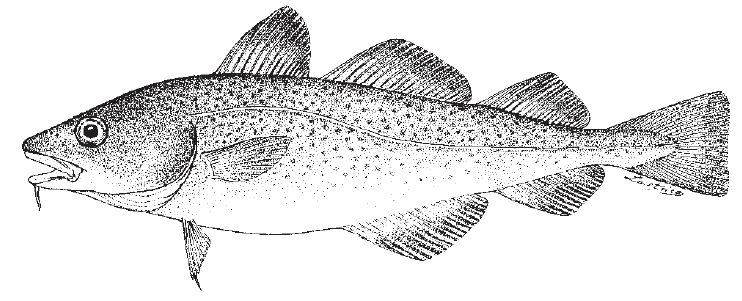
Source: FAO 2002.
| Family | Scientific Name | Author | Year | Common Name |
| Gadidae | Gadus morhua | Linnaeus | 1758 | Atlantic Cod |
Family Gadidae — Large fish to 2 m, commonly from 30 to 100 cm, with elongated body and moderately deep caudal peduncle. Top of head lacking V-shaped ridge. Mouth large with either upper jaw or lower jaw slightly protruding in many; teeth on vomer. Small chin barbel present in most species. Long dorsal fin divided into 3 parts; anal fin in 2 parts. Caudal fin well developed, truncate to forked; pectoral fins well developed, pointed; pelvic fins short, thoracic.
Gadus morhua
Unique Characters: Body color variable but with many brown spots. Lateral line whitish. Lower jaw slightly shorter than upper jaw. Chin barbel large. Caudal fin straight edged. First anal fin short-based, less than 1/2 preanal distance.
Similar Species:
Pollock, Pollachius virens. First anal fin with long base, 1/2 or more of preanal distance. Lower jaw slightly longer than upper jaw. Small chin barbel present in young. Dorsal fins closer together, space between second dorsal fin and third dorsal fin less than length of base of first dorsal fin.
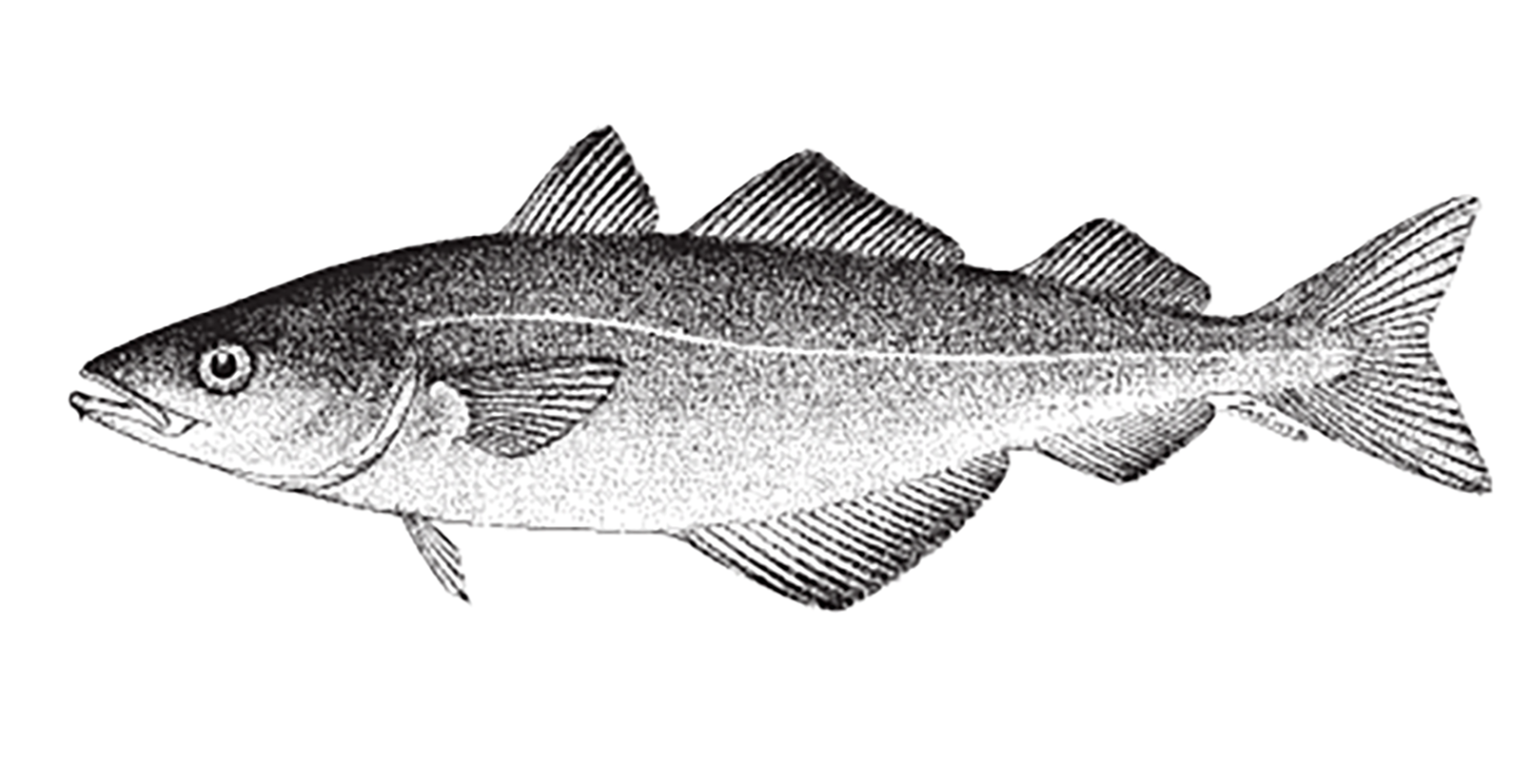
Source: FAO 2002
Haddock, Melanogrammus aeglefinus. Single black blotch on each side above pectoral fin. Lateral line dark. Single, small barbel present on chin. Dorsal fin tall, pointed. Caudal fin margin concave (Kells and Carpenter 2011).
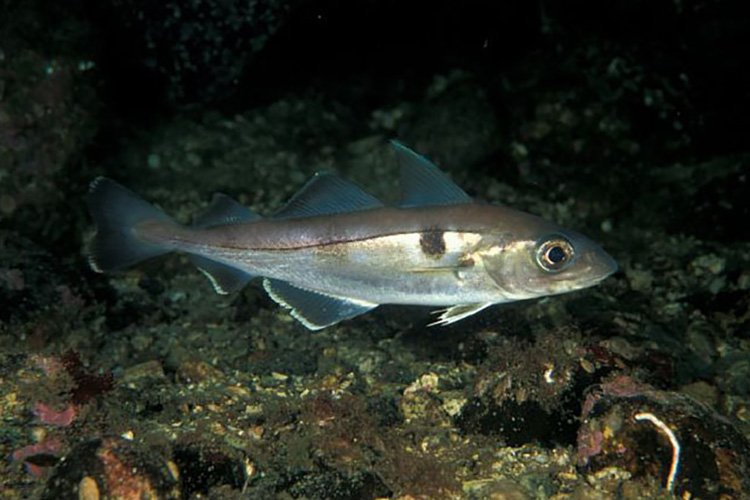
Source: NOAA Fisheries.
Blue Whiting, Micromesestius poutassou. First anal fin with long base, 1/2 or more of preanal distance. Lower jaw slightly longer than upper jaw; chin barbel very small or absent. Dorsal fins widely separated, space between second dorsal fin and third dorsal fin greater than length of base of first dorsal fin.
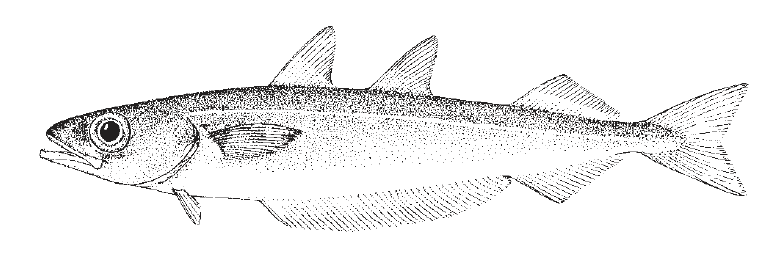
Source: FAO 2002.