
| Family | Scientific Name | Author | Year | Common Name |
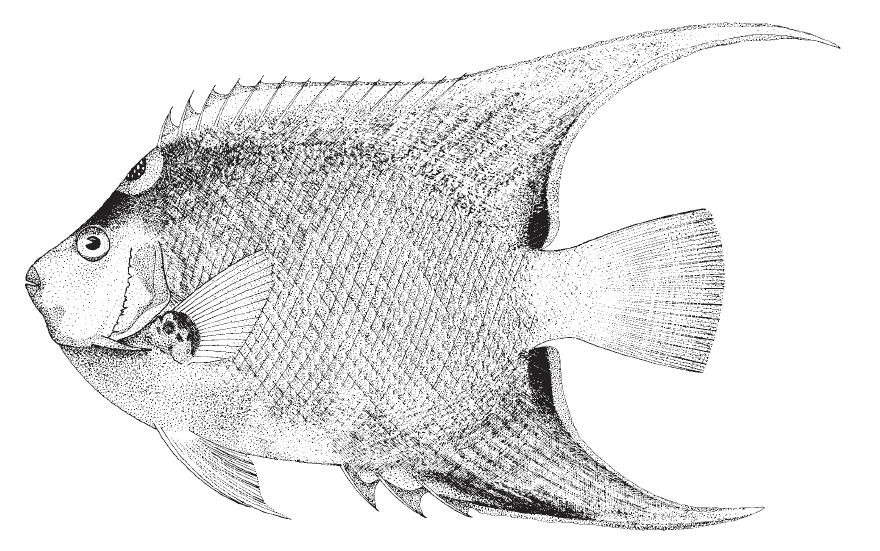
| Pomacanthidae | Holacanthus ciliaris | (Linnaeus) | 1758 | Queen Angelfish |
All Holacanthus Species: Dorsal-fin spines 14 or 15; dorsal and anal fins extended into filaments; scales moderate, regularly arranged, less than 50 in lateral series; hind margin of preorbital bone without enlarged, posteriorly-directed spines; moderate to large-sized fishes; juveniles differently colored than adults, most greatly so (FAO 2002).
Holacanthus ciliaris
Unique Characters: Body not two-toned yellow and black; juveniles not solid yellow with black ocellated spot. Adults: large black spot on nape bordered with blue and containing blue spots; caudal fin yellow; pectoral-fin base with large blue spot; upper corner of opercle blue. Juveniles: body brownish yellow crossed by blue-white bars, the second of which is curved.
Note: Adults of Holacanthus ciliaris, Queen Angel, can easily be distinguished from Holacanthus bermudensis, Blue Angelfish, by color pattern, but the young are much more similar and usually somewhat difficult to identify. To confuse matters these sister species hybridize on a regular basis producing all sorts of intermediate patterns. Holacanthus townsendi was based on such a hybrid (FAO 2002).
Similar Species:
Rock Beauty
Holacanthus tricolor
Blue Angelfish
Holacanthus bermudensis
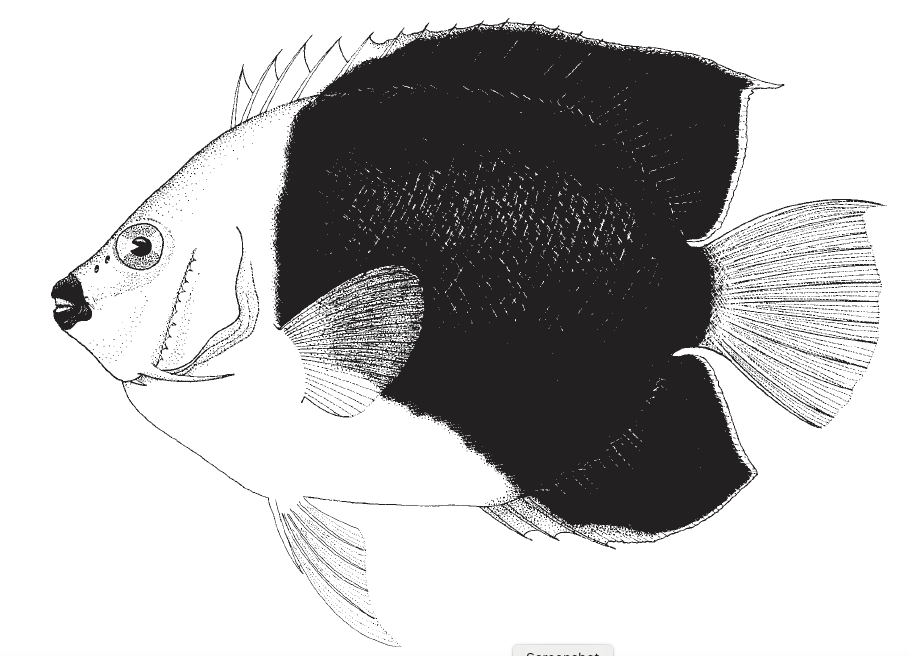
Rock Beauty, Holacanthus tricolor. Anterior portion of body bright yellow, posterior black; juveniles bright yellow with large black spot ocellated in blue in posterior portion of body above midline.
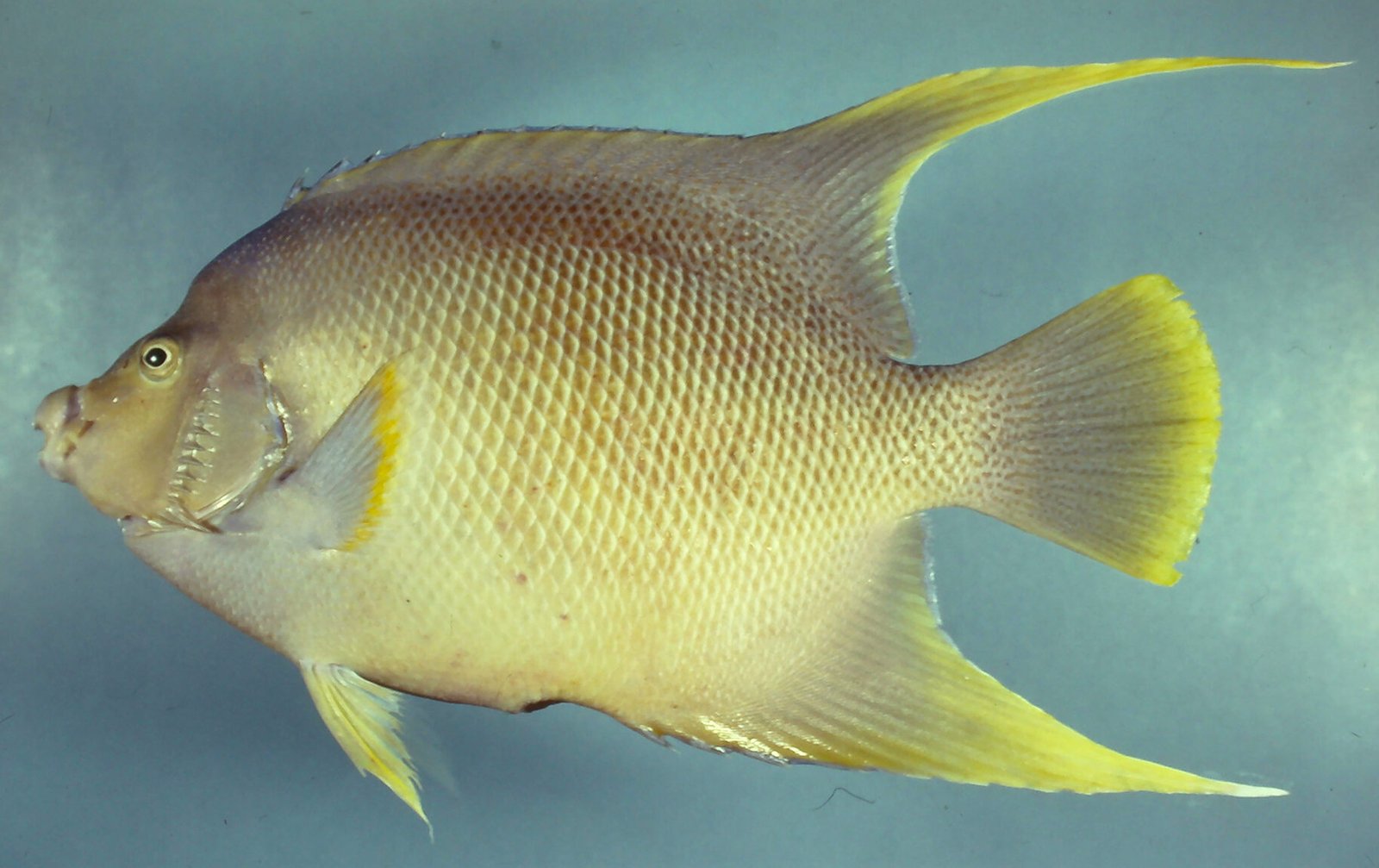
Blue Angelfish, Holacanthus bermudensis. Body not two-toned yellow and black; juveniles not solid yellow with black ocellated spot. Adults: no black spot on nape; caudal fin body color and only edged with yellow; pectoral-fin base without large blue spot; upper corner of opercle same color as head. Juveniles: body brownish yellow crossed by blue-white bars, second bar is straight.
Gallery