
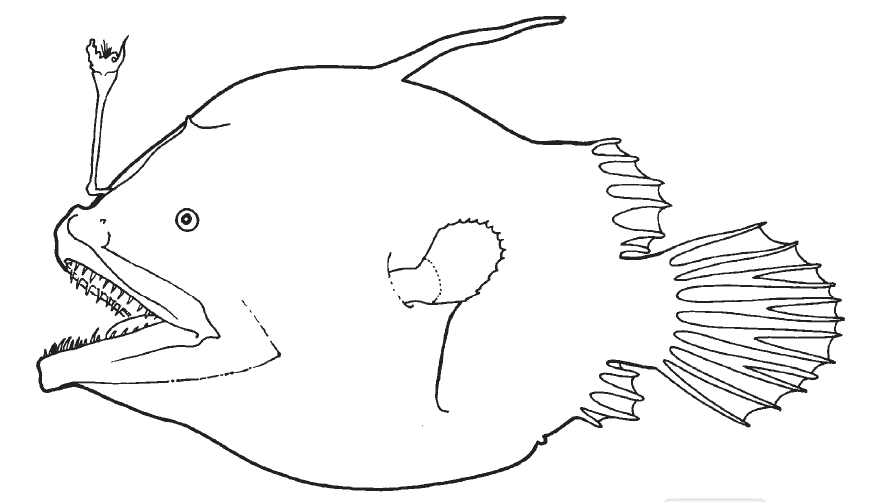
Note: An image (illustration or photograph) of Leptacanthichthys gracilispinis could not be found.
| Family | Scientific Name | Author | Year | Common Name |
| Oneirodidae | Leptacanthichthys gracilispinis | (Regan) | 1925 | Lightline Dreamer |
Leptacanthichthys gracilispinis
Unique Characteristics: The plainchin dreamarn [Lightline Dreamer] has between 4 and 6 soft rays in the dorsal fin and 5 in the anal fin. The metamorphosed adults are distinguished from other members of the Oneirodidae by the possession of a well-developed spine on the manbible and in having an elongated, thin lobe to the pectoral fin. They overall colour is dark with unpigmented patches on the esca. The metamorphosed females have a very large spine on the articular bone, much largere than the spine on the quadrate bone. They have vomerine teeth and the forward end of the illicial trough is wider than its rear end. There are large spines on the sphenotic bone and a small spine at the symphysis of the lower jaw. The operculum has a deeply notched rear margin. The rays of the caudal fin have no interna; pigmentation with the dark pigmented skin on the caudal peduncle extends past the base of the caudal fin. The illicium is longer than the bulb of the esca, the illicial pterygiophore is cylindrical along its whole length, emerging between the frontal bones on the snout with its anterior end just poking through the skin and its rear end hidden beneath the skin. The skin is naked and has no spinules in it. The metamorphosed males also have a long and narrow lobe to the pectoral fin, the lobe being longer than longest pectoral fin rays, articulating along its upper margin. They have 6 teeth on the lower denticular bone and like the females they also have no dermal spinules in the skin. The maximum published standard length of metamorphosed females is 6.9 cm while that of metamorphosed males is 0.8 cm (https://en.wikipedia.org/wiki/Plainchin_dreamarm, Accessed July 13, 2026).
Similar Species: None