
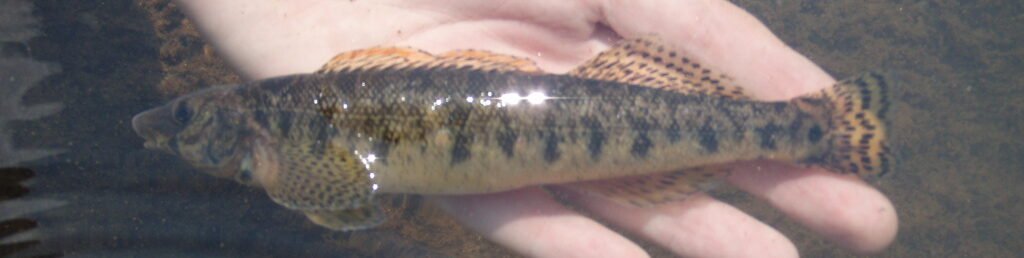
Roanoke Logperch, Percina rex (Jordan and Evermann 1889), Family Percidae, is a very large species of darter that is endemic to the Roanoke and Chowan River basins in Virginia and North Carolina. Its species epithet – rex – means king and refers to Roanoke Logperch being the largest known darter at the time is it was named (Jordan 1889), hence the “King of Darters” moniker. Since then the largest darter mantel now rests upon Percina lenticula, Freckled Darter (Richards and Knapp 1964). Regardless of the debate as to whom is the largest darter, Roanoke Logperch because of its limited distribution and the fact that not much was known about this darter at the time, was listed as federally Endangered in 1989 (USFWS 1989), 100 years after its discovery.
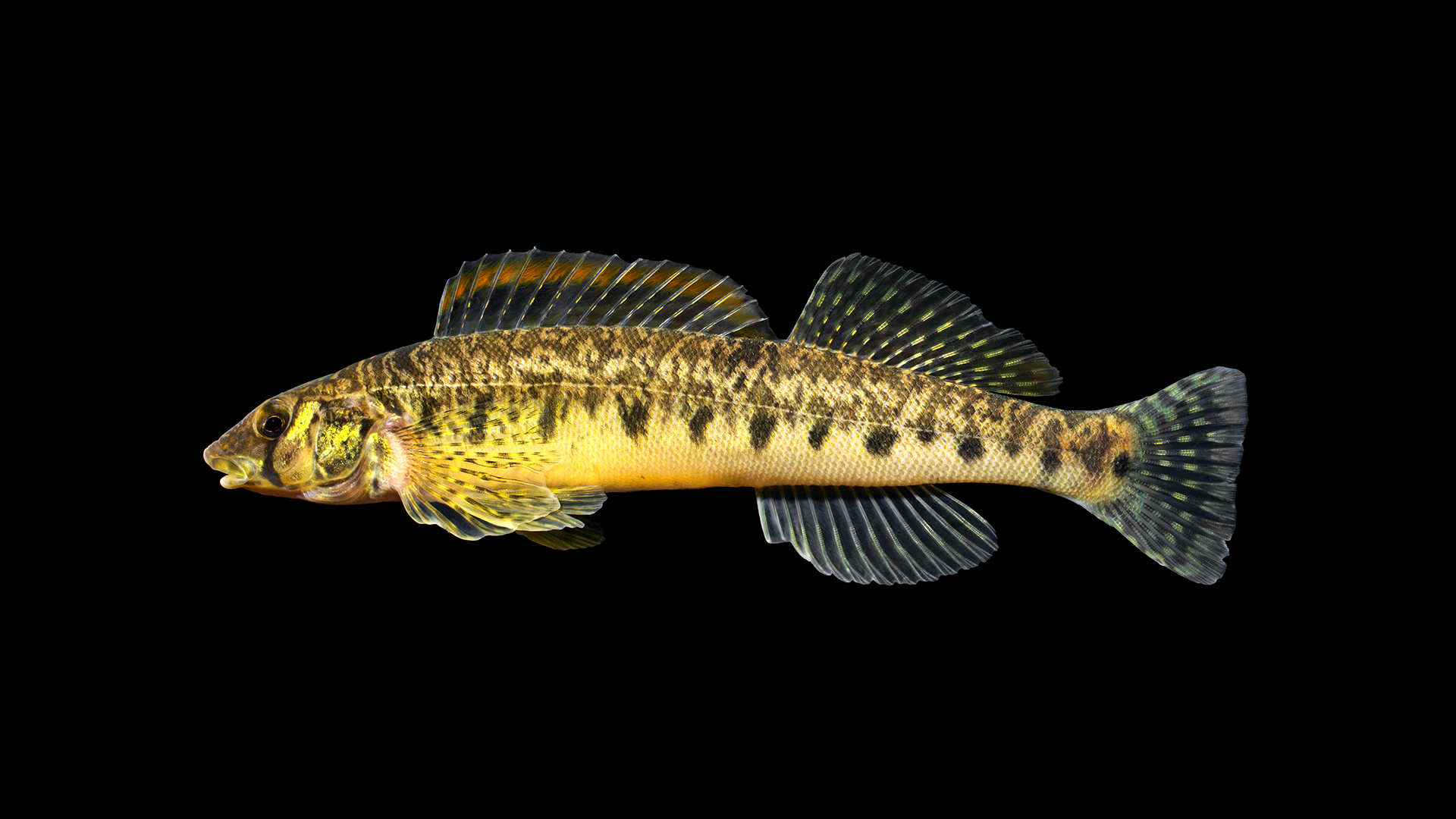
Until the late 2000s, Roanoke Logperch was believed to occur only in Virginia in the Roanoke, Dan, and Chowan River basins (Jenkins and Burkhead 1994; Roberts and Rosenberger 2008). In North Carolina, a single specimen was first discovered in 2007 in the Dan River downstream from its confluence with the Smith River near Eden in Rockingham County. Additional specimens were collected in 2007 and 2008 from the Smith River near Eden and in 2008 from the Mayo River near Mayodan, also in Rockingham County (Tracy et al. 2020). Because Roanoke Logperch was already federally listed as Endangered, its status in North Carolina was automatically listed as state Endangered in 2010.

Thirty-six years later after it had been listed as federally Endangered, in August 2025, Roanoke Logperch was delisted at the federal level because a recent Species Status Assessment by the U.S. Fish & Wildlife Service (USFWS) determined that the species no longer met the definition of an endangered or a threatened species (USFWS 2025). A federally Endangered species is defined as a species that is in danger of extinction throughout all or a significant portion of its range. A federally Threatened species is defined as a species that is likely to become an endangered species within the foreseeable future throughout all or a significant portion of its range.
Its status was delisted because during the past 36 years much has been learned about the species and much has been accomplished at the state and federal levels to restore the species (USFWS 2022). Noting that information at the time of listing was limited, more intensive surveys by North Carolina and Virginia resource agencies discovered additional populations and basic life history and genetic studies were conducted by Dr. Robert E. Jenkins and Noel Burkhead at Roanoke College, Roanoke, VA and professors and graduate students at Virginia Polytechnic Institute & State University, Blacksburg, VA..
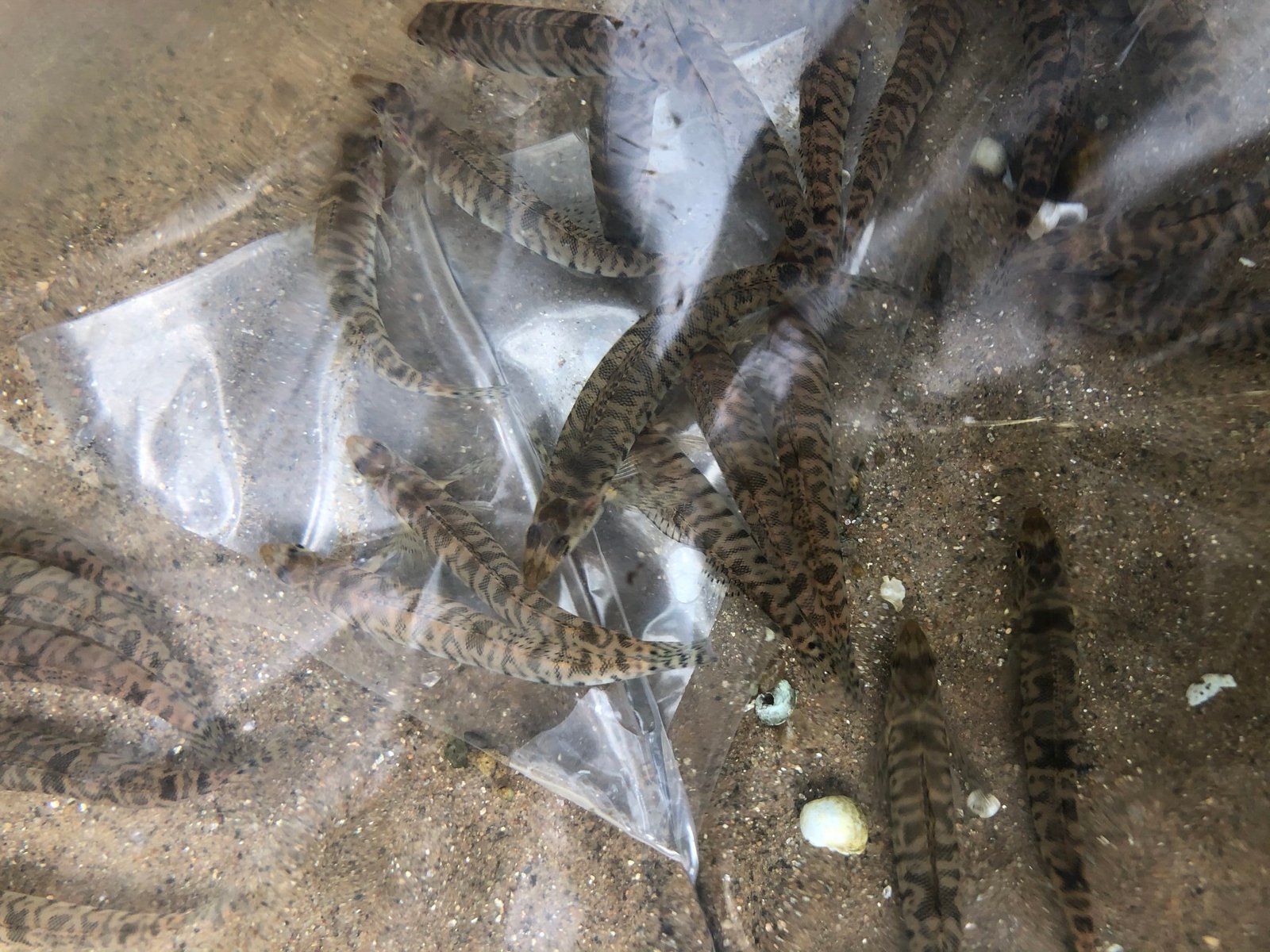
Accomplishments by so called “boots on the ground” have included habitat restoration, connectivity restoration via barrier removal which has reduced habitat fragmentation, removal or modifications to small dams, and augmentation via captive breeding with reintroductions in the upper Mayo River (Anon 2024), as examples.
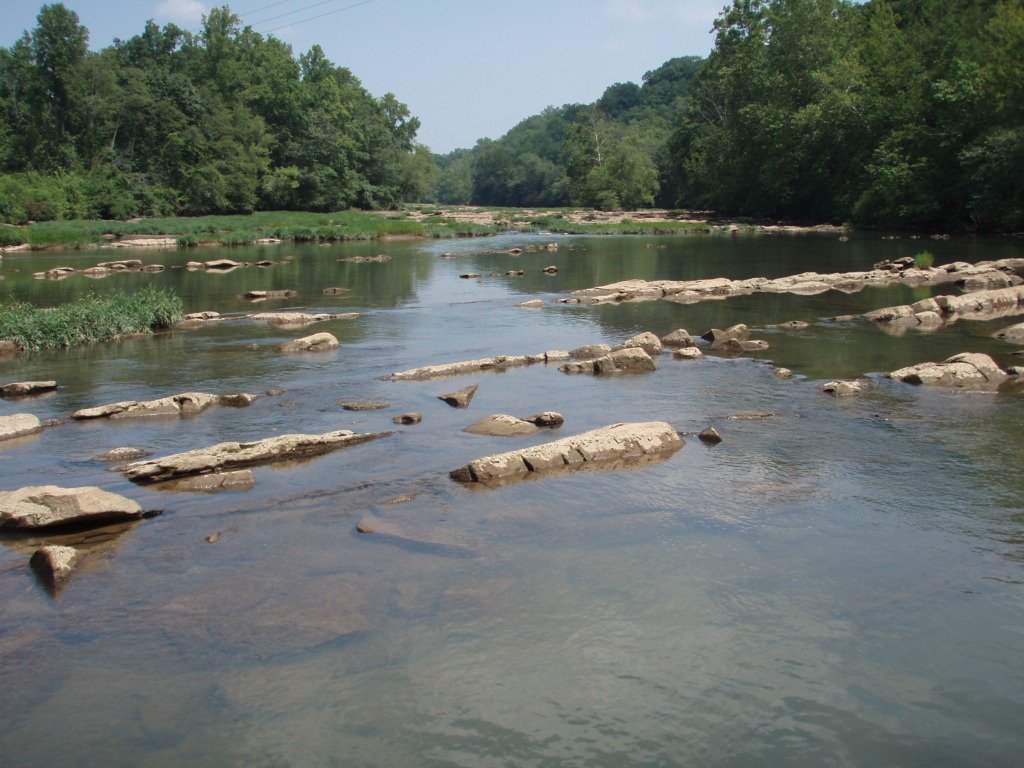
One of the major accomplishments by North Carolina and federal resource agencies, private landowners , and public partnerships was the improvement in fish passage on the Dan River near Madison, NC at the Lindsey Bridge Dam which opened up 50 river miles for the species’ expansion. Another major accomplishment was by the U.S. F&WS’s Partners for Fish and Wildlife Program which completed extensive work in cooperation with agricultural landowners to install livestock fencing and reestablish riparian buffers on their properties. This program made improvements in habitat quality along stretches of rivers and tributaries that are occupied by Roanoke Logperch.
Even though the Roanoke Logperch no longer receives federal protections, the final ruling requires the USFWS in cooperation with North Carolina’s Wildlife Resources Commission and Virginia’s Department of Game and Inland Fisheries to implement a monitoring program for not less than five years for this species. Post-delisting monitoring (PDM) refers to activities undertaken to verify that a species delisted due to recovery remains secure from the risk of extinction after the protections of the Endangered Species Act no longer apply. The primary goal of PDM is to monitor the species to ensure that its status does not deteriorate, and if a decline is detected, to take measures to halt the decline so that proposing the Roanoke logperch as an endangered or threatened species is not again needed.
As of this writing, Roanoke Logperch continues to be listed as state Endangered in both Virginia and North Carolina. However, it is possible that the North Carolina listing may change in the near future and a final evaluation and proposal are expected in 2026. Currently, Roanoke Logperch is found in upper Mayo, Dan, and Smith rivers and in Big Beaver Island, Wolf Island, and Cascade creeks in North Carolina.
Regardless of future listing in North Carolina, Roanoke Logperch will still be considered by the North Carolina Wildlife Resources Commission as a Species of Greatest Conservation Need. Funds for augmentation via captive breeding with reintroductions for subpopulations in the upper Mayo River, Dan River, and Big Beaver Island Creek will continue until 2030. Staff with the North Carolina Wildlife Resources Commission have expressed their continued commitment to propagation (by Conservation Fisheries, Inc., Knoxville, TN), field surveys, and environmental DNA work in the Dan River basin. Introductions into habitats that have never been occupied or re-introductions into previously occupied habitats that are no longer occupied will also be pursued.
REFERENCES
Anon. 2024. News & Notes. Commission Spotlight. Biologists reintroduce endangered Roanoke Logperch in upper Mayo River. Wildlife in North Carolina. 88:7.
Jenkins, R.E., and N.M. Burkhead. 1994. Freshwater fishes of Virginia. American Fisheries Society. Bethesda, MD. 1080pp+.
Jordan, D.S. 1889. Descriptions of fourteen species of fresh-water fishes collected by the U.S. Fish Commission in the summer of 1888. Proceedings of the United States National Museum 11:351-362.
Richards, W.J., and L.W. Knapp. 1964. Percina lenticula, a new percid fish, with a redescription of the subgenus Hadropterus. Copeia. 690-701.
Roberts, J.H. and A.E. Rosenberger. 2008. Threatened fishes of the world: Percina rex (Jordan and Evermann 1889) (Percidae) Environmental Biology of Fishes. 83:439-440.
Tracy, B.H., F.C. Rohde, and G.M. Hogue. 2020. An annotated atlas of the freshwater fishes of North Carolina. Southeastern Fishes Council Proceeding. No. 60. Volume 1. 198pp.
USFWS. 1989. Endangered and threatened wildlife and plants; endangered status for the Roanoke Logperch. Federal Register. August 18, 1989. 54 (159):34468-34472.
USFWS. 2022. Species status assessment report for the Roanoke Logperch (Percina rex), Version 1.1. April 2022. Gloucester, VA. 78 pp.
USFWS. 2025. Endangered and threatened wildlife and plants; removal of Roanoke Logperch from the list of endangered and threatened wildlife. Federal Register. July 22, 2025. 90 (138):34372-34384.
Additional information on the Roanoke Logperch may be found on these Internet websites:
- https://www.youtube.com/watch?v=yRthDGVs8Oc
- https://ncfishes.com/an-update-on-north-carolinas-imperiled-freshwater-fish-fauna-july-14-2025/
- https://ncfishes.com/roanoke-logperch-on-the-road-to-recovery/
- https://www.govinfo.gov/content/pkg/FR-2025-07-22/pdf/2025-13702.pdf
- https://www.federalregister.gov/documents/2025/07/22/2025-13702/endangered-and-threatened-wildlife-and-plants-removal-of-roanoke-logperch-from-the-list-of#:~:text=Endangered%20and-,Threatened,-Wildlife%20and%20Plants%3B%20Removal
- https://www.fws.gov/press-release/2025-07/roanoke-logperch-delisted
- https://www.pbsnc.org/blogs/science/an-endangered-fish-makes-a-comeback/
- https://www.youtube.com/watch?v=ehMMbsXJAyE&t=7s
- https://appvoices.org/2025/09/10/roanoke-logperch-removed-from-endangered-species-list/
- https://www.youtube.com/watch?v=2wcyjsjDQcc